
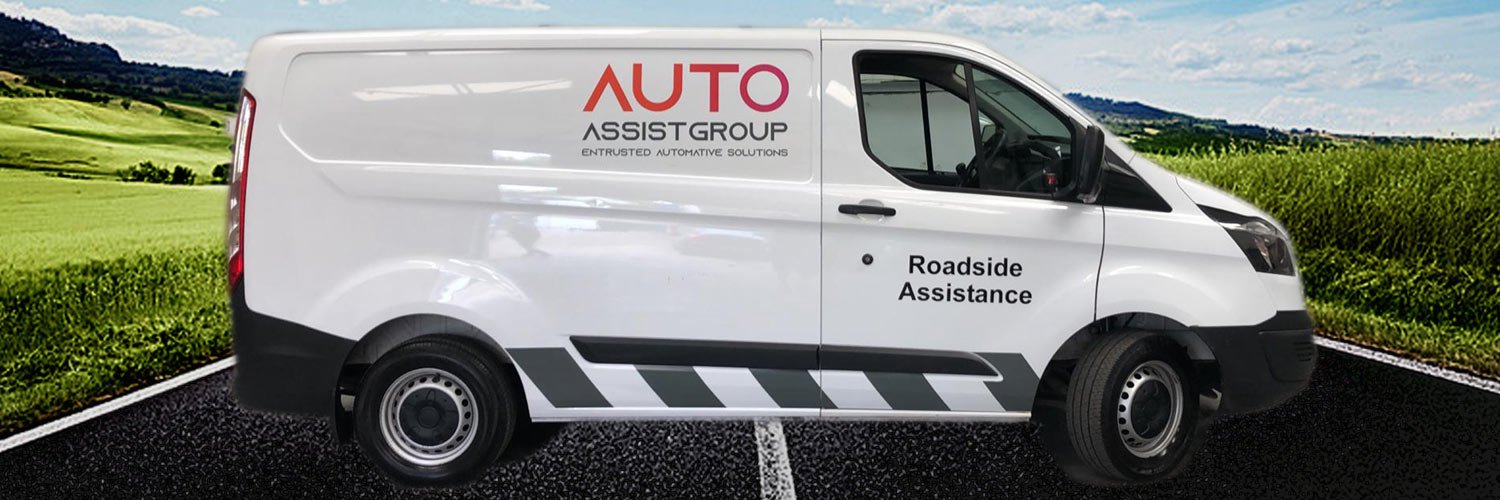
Dedicated AdBlue Specialist Assistance





AdBlue Problems, Crystallisation and Fuel Drainage
Did you know that in 2018, the AA dealt with 23,000 AdBlue® errors? When AdBlue® is mixed with diesel, it crystallises and becomes problematic. AdBlue® mixes and turns into a milky substance which sticks to most internal car parts. Literally, minutes after being mixed, AdBlue® will start to crystallize and harden, thus causing blockages and serious damage to high-pressure components such as high-pressure fuel pumps, injectors, fuel lines, fuel tanks, possibly causing your engine to fail completely. As the AdBlue® system is very sensitive and delicate, it requires specific expertise. It is very important to deal with any issues regarding the AdBlue problems system without delay.
Manufacturers recommend that to rectify AdBlue problems contamination, every component that has been contaminated needs to be replaced, which of course is a very expensive job. Otherwise, the entire fuel system can be at risk of damage. The very nature of AdBlue® is that it penetrates deep into the fuel system very quickly, and will not be removed by simply draining.
How AdBlue Assist Can Help You
At AdBlue® Assist, our specialist team can help with this ever-growing problem of contamination – the first step is to perform diagnostic testing to understand the extent of the problem. We then use proprietary methods and specially formulated treatments designed to remove the AdBlue® contamination, to the fullest extent. With over 125 years of combined knowledge, we can deal with any AdBlue® contamination issue at the roadside or at our national Garage Assist network of workshops, and dispose of the contaminated fuel safely.
Why Pick us?
Having dealt with over 38,000 successful contamination treatments since 2009, Auto Assist Group have deployed a nation-wide specialist fleet to solve AdBlue® contamination issues. This enables us to respond within minutes and give you peace of mind instantly, making us the best choice for your AdBlue® related problems. Unlike other types of contamination, if AdBlue® contamination is not dealt with correctly straight away, it can have lasting effects that could cause engine damage. With our specialist equipment and our extensive knowledge of AdBlue® and fuel systems, we can deal with all types of AdBlue® contamination issues no matter where they occur, and dispose of the contaminated fuel safely.
Contaminated AdBlue Problems?
If your AdBlue® tank has become contaminated, our national reach means we can have you back on the road in no time. With our dedicated team and wealth of knowledge, we will physically remove the tank at one of our national Garage Assist Networks, fully drain and remove the contamination, as well as dispose of the contamination safely..
Simply The Best In AdBlue® Fuel Drainage With Nationwide Coverage
Troubleshooting AdBlue Problems
- Reading from the temperature sensor, upstream from the SCR catalytic converter
- Reading from the NOx sensor control unit, upstream from the SCR catalytic converter
- Reading from the NOx sensor control unit, downstream from the SCR catalytic converter
- AdBlue® tank for DEF quality and quantity
- AdBlue® delivery pump and injection valve
- AdBlue® metering amount
- Visually inspection for leaks
Common Faults With AdBlue Problems
Our AdBlue® Assist engineers often come across the following, common AdBlue® faults:
- a fault code ‘’P20E8 00 [237] – Pressure too Low’’ which normally indicates that the pump needs replacing, and this is an area we specialise in;
- the in-tank heater element burns out, which our skilled engineers can advise you further on;
- Injector and connecting tubing gets clogged up – as this system works only at high exhaust temperatures, urea solution can crystallize especially if you have frequent short journeys;
- NOx sensor can break or give a false reading especially in Mercedes NOx Errors.
- AdBlue® Check Additive See Operator’s Manual
- AdBlue® Range
- Engine Start Not Permitted (AdBlue® Empty)
- Check AdBlue® No engine Start Possible in XXX miles/km.
- Check AdBlue® Remaining starts: X
The Two Most Common AdBlue Problems Are:
- DEF fluid low level
- A fault with the SCR system
AdBlue® Assist engineers have seen these problems and more, for example with the newer Mercedes BlueTec. This model is prone to switch to limp mode, which prevents you from driving the vehicle thereon, similar to the AdBlue® problems we have encountered with Audi, BMW, Honda, Land Rover, Lexus, Mini, Skoda, Toyota, Vauxhall, Volkswagen, Volvo. AdBlue® Assist has all the experience and specialist tools to provide you with an optimum outcome, saving you both time and money.
We not only Specialists in car AdBlue® removal, but we also specialise in Van AdBlue® removal, Truck AdBlue® removal, Plant Machine AdBlue® removal, Scania AdBlue® removal, Volvo AdBlue® removal and non-road mobile machinery.
AdBlue® technology is widely employed in non-road mobile machinery that uses diesel-powered engines. When AdBlue® is mixed with diesel, it crystalises and becomes problematic, so machinery such as hedge trimmers/chainsaw generators, bulldozers, construction machinery, industrial trucks, forklifts mobile cranes, become susceptible to crystallisation due to contamination. Fortunately, we have all the expert knowledge, workshops and roadside equipped vans, all under one roof to get you up and running in the least possible time.
AdBlue FAQ:
We are often asked this question, how do I know if the AdBlue® is working? The simplest answer is that if it is not working, it will prevent you from driving the car.
This is as easy as filling up with fuel. The DEF tank filler is located next to the fuel fill cap or in some cases where the spare wheel is located, depending on the vehicle make and model. Just open the fuel lid, and locate the blue coloured cap. Remove the cap, and refill.
If a car is equipped with SCR technology it will have an AdBlue® tank. The location of the tank varies across manufacturers and from model to model but is often close to the diesel tank or in the boot, under the carpet, or in the engine compartment. It can usually be identified by a blue cover.
Note: Make sure to add AdBlue® to the correct tank. Do not mix AdBlue® with diesel fluid. AdBlue® is not an additive or a lubricant. Do not mix water with AdBlue®.
If you run out of AdBlue® while you’re driving, then the engine’s power and performance will be reduced to limp mode to limit its emissions and once the engine has stopped, it won’t re-start until the AdBlue® tank is refilled. The car’s dashboard will provide plenty of warning that the AdBlue® tank is running low – usually with approximately 1500 miles supply remaining, followed by an amber warning light when the tank is nearly empty. The rate at which cars use AdBlue® varies depending on the engine and how the car is driven. Typical consumption seems to be approximately a litre of AdBlue® every 600 miles but could be as high as a litre every 350 miles. The size of the tank varies too, so the range between refills could be anywhere between 3,000 and 12,000 miles, depending on the car and driving style.
AdBlue® is synthetic urea which works by turning nitrogen oxide into harmless steam and nitrogen. It is stored in a tank, like fuel, in an increasing number of diesel vehicles, but typically those with larger engines, are being fitted with AdBlue® tanks.
Do not start your vehicle, as this could cause damage to your fuel system. You will need to get the tank drained and dispose of the contents safely before you can refill it. Hopefully, there is no lasting damage done.
The most important thing to remember if this happens is, not to start your car. Switching on your engine will cause the diesel to run through the system, which could cause catastrophic failure. You will need to have your AdBlue® tank drained to solve the problem. If there is any lasting damage, you will need to have affected components changed.
If your car has a warranty, it is important to use branded AdBlue® solution. For any solution to use this trademark, it must comply with certain standards that vehicle manufacturers’ SCR systems rely on. Failing to do so could invalidate the warranty.

Our Clients







BCA | Direct Line | DLG Auto Services | ECP | Link LV | Mercedes-Benz Commercial | Motorbitz | Subaru | TCL Group |Tesco | WMS Rescue & Recovery